Discovering that your Invisalign tray has cracked overnight can be worrying, especially if it appeared perfectly fine before you went to bed. Could the damage be caused by teeth grinding? Will a cracked aligner affect your orthodontic treatment, and does it need to be replaced immediately?
Invisalign aligners can sometimes become damaged during normal use. However, the appropriate next steps depend on the location and severity of the crack.
Mục lục
Can Invisalign trays crack while you sleep?
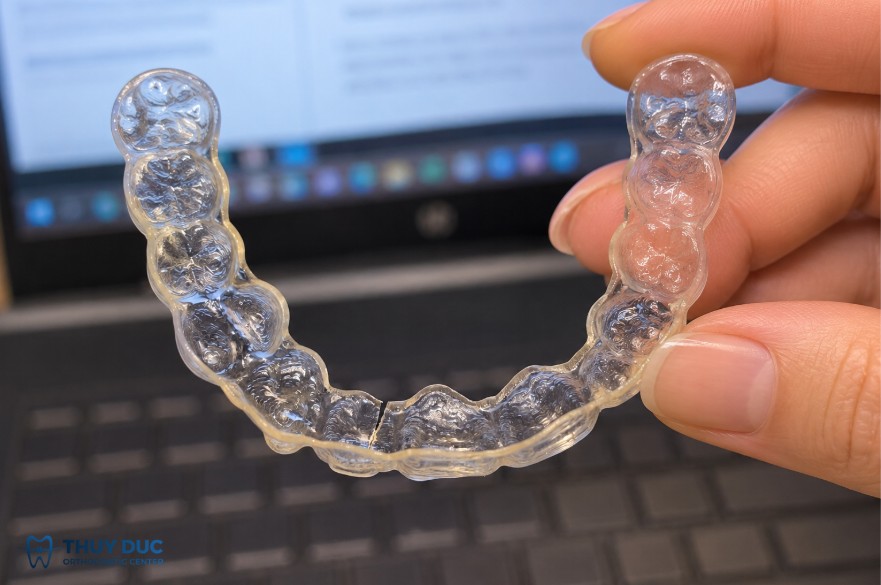
Yes. Invisalign trays can develop cracks while being worn during sleep, although not every case of overnight damage is directly related to teeth grinding.
Invisalign aligners are generally designed to be worn for approximately 20–22 hours per day, including while sleeping. Wearing your aligners overnight is therefore a normal and essential part of maintaining your orthodontic treatment schedule.
However, aligners can still crack, become damaged, or lose their shape during use. Align Technology, the manufacturer of Invisalign, advises patients to inspect their aligners before inserting them and before going to bed to check for signs of damage.
If you wake up and notice a crack in your Invisalign tray, the important thing is to assess the condition of the aligner rather than assume that wearing it overnight caused the damage.
Why did my Invisalign tray crack overnight?
It is not always possible to identify the exact cause of a cracked Invisalign tray simply by knowing when the damage was discovered. Several factors may contribute to the problem:
- Teeth grinding or clenching during sleep: These activities can place additional pressure on your teeth and aligners, potentially contributing to damage in some cases.
- Pre-existing small cracks: A tiny crack may have already developed before bedtime but gone unnoticed. Continued use can sometimes make the damage more visible.
- Improper aligner removal: Frequently pulling too hard or excessively bending your aligners when removing them may place unnecessary stress on thinner sections of the tray.
- Previous aligner distortion: Exposure to hot water or inappropriate handling may affect the aligner’s shape and structural condition.
Teeth grinding is particularly worth considering if you frequently wake up with sore jaw muscles, experience pain around your temples, or have been told by a sleeping partner that you grind your teeth at night.
However, these symptoms alone cannot confirm that bruxism caused your aligner to crack.
If you suspect nighttime grinding, you can learn more about sleep bruxism, its symptoms, and possible causes.
Can you still wear a cracked Invisalign tray?
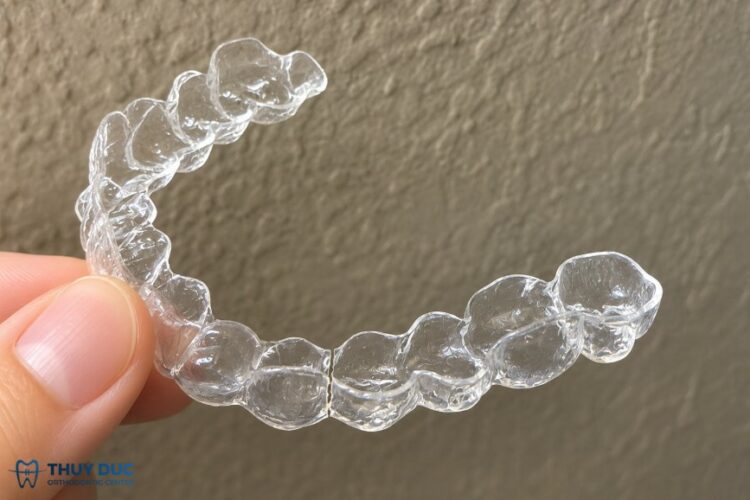
Not all Invisalign cracks are equally serious, but a damaged aligner should be assessed before you continue using it.
According to Align Technology’s instructions for use, patients should notify their treating orthodontist immediately if an aligner develops significant cracks or becomes severely distorted.
In particular, the manufacturer advises against wearing an aligner with a crack that extends to approximately the height of a tooth.
Even if the crack appears smaller, you should not automatically assume that the aligner is still safe to wear or capable of applying the intended orthodontic forces.
Your orthodontist may need to evaluate the location and extent of the crack, the stability of the tray, and how closely it continues to fit your teeth.
If the aligner has sharp edges that injure your gums or cheeks, has separated into multiple pieces, or no longer fits securely, stop wearing the damaged tray and contact your orthodontist for instructions.
Invisalign aligners are made from a specialized thermoplastic material designed to provide controlled tooth movement. You can learn more about Invisalign SmartTrack material and how it works.
What should you do if your Invisalign tray cracks overnight?
If you discover a crack in your Invisalign aligner when you wake up, follow these steps:
- Step 1 – Inspect the damaged aligner: Check where the crack is located, how far it extends, and whether the tray has become distorted. Take clear photographs of the damage so you can share them with your orthodontist.
- Step 2 – Contact your orthodontic clinic: Tell your orthodontist which aligner number you are currently wearing, how long you have been using it, and what type of damage you have noticed.
- Step 3 – Do not attempt to repair the tray yourself: Avoid using glue, heat, or tools to reconnect cracked sections, reshape the aligner, or force damaged areas back into place.
- Step 4 – Follow your orthodontist’s replacement instructions: Depending on your treatment progress and the condition of the aligner, your orthodontist may recommend temporarily wearing a previous tray, moving to the next aligner, or ordering a replacement.
Do not skip an aligner or stop wearing your trays for several days without professional guidance. If you have not yet received instructions, contact your orthodontic clinic as soon as possible to minimize interruptions to your treatment.
Understanding the Invisalign treatment process and aligner replacement schedule can also help you understand why each tray plays an important role in the planned movement of your teeth.
How can you prevent Invisalign trays from cracking during sleep?
Although it is not possible to prevent every case of aligner damage, several habits may help reduce unnecessary stress on your Invisalign trays.
- Inspect your aligners before bedtime: Check the surfaces, edges, and thinner areas for visible cracks, distortion, or other signs of damage, as recommended by Align Technology.
- Remove and insert your aligners correctly: Handle your trays gently and follow your orthodontist’s instructions. Avoid forceful pulling, twisting, or excessive bending when removing them.
- Avoid hot water: Clean your aligners using water at an appropriate temperature and cleaning products recommended for Invisalign. Hot water can distort the aligner material.
- Tell your orthodontist if you grind your teeth: If you frequently clench your jaw, wake up with jaw muscle soreness, or repeatedly damage your aligners, discuss these symptoms with your orthodontist for further assessment.
If you grind your teeth during sleep, do not independently add a night guard or replace your Invisalign aligners with another type of oral appliance.
Your orthodontist should evaluate your individual situation and recommend an appropriate approach that does not interfere with your planned tooth movements.
In summary, Invisalign trays can sometimes crack during sleep, but this does not mean that wearing aligners overnight is unsafe. If you discover a crack, inspect the damage and contact your orthodontist to determine whether the aligner can still be used or needs to be replaced.
Never attempt to repair a cracked tray yourself or change the order of your aligners without professional guidance. Prompt assessment can help prevent unnecessary interruptions to your orthodontic treatment.