Invisalign aligners are designed to fit snugly over your teeth and apply controlled forces to move them according to your orthodontic treatment plan. However, you may sometimes find that your Invisalign trays feel too tight or are difficult to remove, especially when switching to a new set of aligners or when you have several attachments on your teeth.
Is this normal? How can you remove tight Invisalign trays safely, and when should you contact your orthodontist? Here’s what you need to know.
Mục lục
Why Are My Invisalign Trays So Tight and Hard to Remove?
Each set of Invisalign aligners is custom-made to guide your teeth through a specific stage of movement. The trays need to fit closely around your teeth to apply the intended forces. As a result, some tightness or pressure is normal, particularly when you first start treatment or switch to a new set of aligners.

If your Invisalign trays are unusually difficult to remove, several factors may be responsible:
- Switching to a new set of aligners: Each new tray is designed for the next stage of tooth movement. It may feel tighter than the previous one, especially during the first few days of wear.
- Multiple attachments on your teeth: Attachments are small, tooth-colored composite shapes bonded to certain teeth. They help the aligners apply specific forces and control tooth movement, but they can also make the trays more difficult to remove. Learn more about Invisalign attachments and how they work.
- Unfamiliarity with the removal technique: If you are new to Invisalign, you may not yet know where to grip the aligner or how to release it properly. This can make the tray feel as though it is stuck.
- Aligners not fitting as expected: If you haven’t worn your aligners for the recommended number of hours or your teeth haven’t moved as planned, the next tray may feel unusually tight or fail to seat properly. Your orthodontist may need to check the fit.
It’s important to distinguish between an aligner that fits snugly and one that is genuinely stuck. If removing your tray causes sharp pain, requires excessive force, or seems impossible, do not keep pulling on it.
How to Remove Tight Invisalign Trays Safely
According to Invisalign’s official instructions for use, you should begin removing your aligners from the back teeth, releasing both sides before gradually working toward the front teeth.

Follow these steps to remove a tight Invisalign tray:
- Step 1 – Start at the back teeth: Wash your hands thoroughly. Using your fingertip, gently lift the inner edge of the aligner near the back molars on one side of your mouth. Carefully release that section from your teeth.
- Step 2 – Release the opposite side: Repeat the same movement on the back molars on the other side. Avoid pulling the entire aligner out while one side is still firmly attached.
- Step 3 – Work your way toward the front: Once the aligner has been released from the back teeth on both sides, use your fingertips to gently remove the remaining sections, moving gradually toward your front teeth.
- Step 4 – Check the aligner: After removing it, inspect the tray for cracks, distortion, or damage, particularly around areas where it was difficult to release.
Important: Never twist, bend excessively, or forcefully pull your Invisalign trays. Do not use sharp objects to remove them. If the aligner cannot be released with gentle, controlled movements, stop and contact your orthodontist for guidance.
Can I Use an Aligner Removal Tool If My Invisalign Tray Is Too Tight?
Yes. A dedicated aligner removal tool may help if your orthodontist recommends it and shows you how to use it correctly. These tools can be particularly useful for patients who find it difficult to grip their aligners with their fingers, especially when several attachments are present.
Invisalign’s instructions for use also acknowledge that an appropriate removal aid may be considered when necessary.
One example is the PULTOOL, an aligner removal accessory featured in the Invisalign accessories store. It has a small hook-shaped design that helps lift the edge of a clear aligner without requiring you to grip it directly with your fingernails.
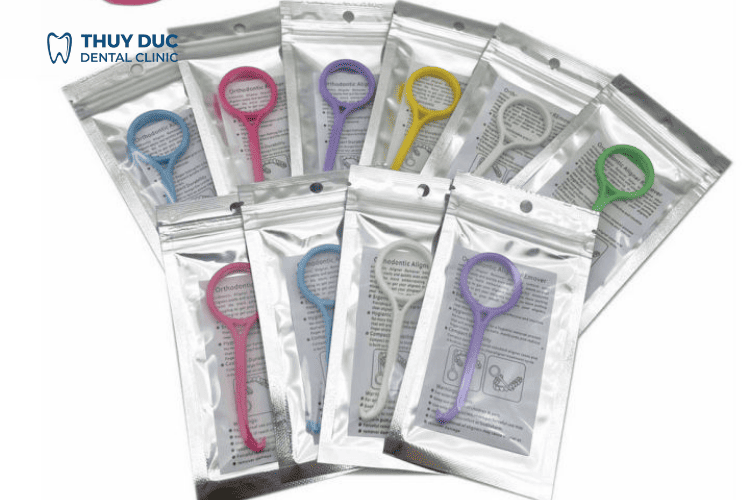
However, using a removal tool does not mean you should apply more force. Always position the tool correctly, use gentle movements, and stop if the aligner will not release or you experience unusual pain.
Never substitute an aligner removal tool with tweezers, scissors, knives, metal hooks, or other sharp objects. These can damage the aligner or injure your gums and other soft tissues.
Is It Normal for Tight Invisalign Trays to Hurt When Removing Them?
Some tooth tenderness, pressure, or mild discomfort can occur when you first begin Invisalign treatment or switch to a new set of aligners. According to Invisalign, this initial pressure generally decreases as your teeth adjust to the new trays.
However, significant pain when removing your Invisalign aligners should not be considered a sign that the treatment is working better.
Contact your orthodontist if you experience any of the following:
- Your aligner is so firmly attached that you cannot remove it using gentle movements.
- You experience sharp or severe pain when attempting to lift the tray off your teeth.
- An attachment has come loose, or you suspect the aligner is catching abnormally on an attachment.
- Your aligner appears cracked, distorted, or damaged after removal.
- Removing your aligners repeatedly causes cuts, irritation, or injury to your gums or oral tissues.
Your orthodontist can check whether the aligner fits correctly, examine the attachments, and demonstrate a removal technique suited to your teeth. If necessary, they may also reassess your aligner wear schedule or treatment plan.
How Can I Make Invisalign Trays Easier to Remove?

Developing a few good habits can make removing your Invisalign trays easier and help prevent unnecessary discomfort throughout treatment.
- Practice the correct removal technique: Always begin at the back teeth and gradually release the aligner toward the front, rather than pulling directly from your front teeth.
- Wear your aligners as prescribed: Invisalign aligners are generally worn for 20–22 hours per day, unless your orthodontist gives you different instructions. Consistent wear helps your teeth follow the planned movements.
- Follow your prescribed aligner schedule: Never skip trays, change their order, or switch to the next set earlier than instructed. Each stage is carefully planned as part of your Invisalign treatment process.
- Check your attachments: Let your orthodontist know if an attachment becomes loose, develops an unusual edge, or seems to interfere with aligner removal.
- Ask for a hands-on demonstration: If you frequently struggle to remove your trays, ask your orthodontist to demonstrate the technique and let you practice it during your appointment.
It’s also worth understanding that Invisalign aligners are made from SmartTrack aligner material, which is designed to provide a close, controlled fit. However, a snug fit should not require excessive force to remove the trays.
In summary, Invisalign trays may feel particularly tight or difficult to remove when you first switch to a new set or have multiple attachments on your teeth. Mild tightness can be normal, but you should never force an aligner off your teeth. Start removing the tray from the back molars, work gently toward the front, and contact your orthodontist if the aligner becomes stuck, causes significant pain, or cannot be removed normally.