Tooth decay can begin with little more than a small dark spot or occasional sensitivity, but once the damage progresses deeper into the tooth, treatment can become more complicated. A small cavity may only need a filling, while decay that reaches the dental pulp can require root canal treatment followed by a suitable restoration to protect the remaining tooth.
This is why choosing a dental clinic for tooth decay treatment involves more than finding somewhere that offers fillings. A reliable clinic should be able to determine how far the decay has progressed, check whether the pulp and surrounding tissues are affected, and recommend a treatment that preserves as much healthy tooth structure as possible.
If you live in Hanoi and are looking for professional treatment for cavities or more advanced tooth decay, the following dental clinics are worth considering.
Mục lục
- 1. Thuy Duc Dental Clinic
- 2. Kim Dental
- 3. Parkway Dental
- 4. Lac Viet Intech Dental
- 5. Paris Dental Clinic
- 6. Viet Phap International Dental Clinic
- 7. Gia Dinh Dental Clinic
- 8. DND International Dental Clinic
- When should you see a dentist for tooth decay?
- What should you look for when choosing a clinic for cavity treatment?
1. Thuy Duc Dental Clinic
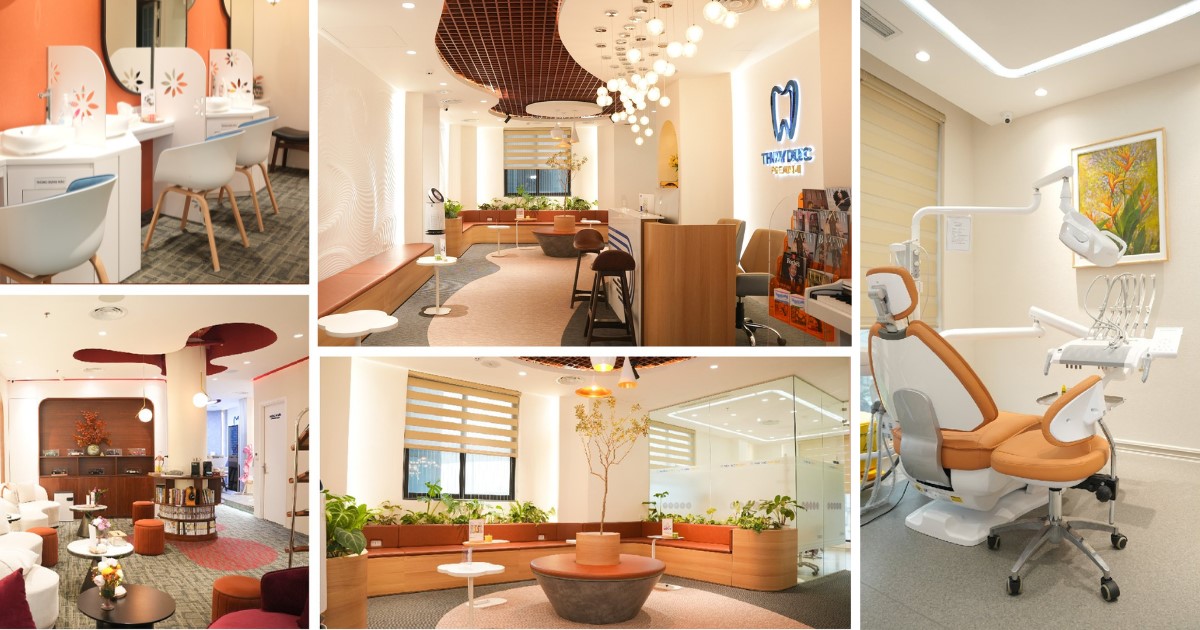
Thuy Duc Dental Clinic is one of the established private dental clinics in Hanoi, with nearly two decades of experience in general and specialist dental care. While the clinic is widely known for orthodontics and Invisalign, it also provides general dentistry, restorative treatment, root canal therapy and preventive dental care for both adults and children.
For tooth decay, one of the clinic’s strengths is that treatment is not limited to simply filling the visible cavity. The dentist first assesses how much tooth structure has been affected and whether the decay is still confined to the outer layers of the tooth or has progressed towards the dental pulp.
Different treatments for different stages of tooth decay
Early and moderate cavities can often be treated by removing the decayed tissue and restoring the tooth with a filling. The aim is to stop the progression of decay while preserving as much healthy natural tooth as possible.
If the cavity has progressed deeper and the pulp has become irreversibly inflamed or infected, a simple filling is no longer enough. Root canal treatment may be required to remove the affected pulp tissue, disinfect the root canal system and preserve the remaining tooth.
This distinction is important because toothache does not always indicate the same problem. Some cavities cause sensitivity to cold or sweet foods, while deeper decay can cause spontaneous pain, prolonged sensitivity or pain that becomes more noticeable at night.
For patients who are unsure how serious a cavity may be, a dental examination is therefore more useful than deciding on a filling based only on what can be seen in the mirror.
Diagnostic imaging when necessary
Thuy Duc has an on-site dental imaging system, allowing dentists to request X-rays when the extent of decay or the condition around the roots cannot be fully assessed during a clinical examination.
This is particularly useful when decay is deep, when an old filling has failed or when the dentist suspects that the dental pulp may already be involved.
Having examination, imaging and treatment available at the same clinic also means patients do not normally need to visit a separate imaging centre before returning for treatment.
Root canal treatment for deeper decay
When tooth decay reaches the pulp, preserving the tooth may require endodontic treatment. The dentist removes the infected or irreversibly inflamed pulp, cleans and disinfects the root canal system and then seals it to reduce the risk of reinfection.
The tooth is subsequently restored according to the amount of remaining natural structure. Some teeth can be restored with a filling, while heavily damaged teeth may require additional restorative treatment to protect them during chewing.
For this reason, the final cost of treating a severely decayed tooth can be different from the price of root canal treatment alone.
Tooth decay treatment prices at Thuy Duc
According to the clinic’s current reference price list, the cost depends considerably on the type of treatment required:
| Treatment | Reference price | Notes |
|---|---|---|
| Permanent dental filling | VND 300,000–1,250,000 | Price varies according to the tooth and restoration required |
| Root canal treatment | VND 3,000,000–5,000,000 | For teeth where the pulp requires endodontic treatment |
| Pit and fissure sealing | VND 350,000 | Preventive treatment for susceptible pits and fissures |
| Teeth scaling | VND 400,000–600,000 | May be recommended as part of general oral care |
| Periodontal treatment | VND 1,000,000–2,000,000 | Reference price per tooth |
These prices should be treated as references. The final treatment plan depends on the depth of the cavity, the tooth involved and whether additional restorative treatment is necessary.
Dental care for children
Thuy Duc also provides dental treatment for children. Managing cavities in primary teeth is important because baby teeth contribute to chewing, speech and maintenance of space for the permanent teeth.
The clinic provides fillings for primary teeth as well as preventive treatments such as fluoride application and pit and fissure sealing. When decay has progressed into the pulp of a primary tooth, paediatric root canal treatment may also be considered depending on the tooth and the child’s stage of dental development.
For parents, having both preventive and restorative services available within the same clinic can make regular monitoring easier, particularly for children who have previously developed multiple cavities.
Overall, Thuy Duc is particularly worth considering for patients who want tooth decay assessed and treated within a clinic that can manage the different stages of the condition—from a small cavity requiring a filling to deeper decay requiring root canal and restorative treatment.
Contact information:
- Branch 1: 64 Pho Vong, Bach Mai Ward, Hanoi
- Branch 2: Floors 3–4, GP Building, 257 Giai Phong, Bach Mai Ward, Hanoi
- Phone: 033 609 3366
2. Kim Dental
Kim Dental is one of the larger private dental systems in Vietnam and provides general, restorative, endodontic, orthodontic and implant dentistry. Its Hanoi clinics are an option for patients who prefer a larger dental network with several specialties available within the same system.

For tooth decay, the first step is generally an examination to determine the extent of the damaged tooth. Diagnostic imaging can be requested when the dentist needs more information about deeper decay or the condition of the roots.
Small and moderate cavities can generally be restored after the decayed tooth structure has been removed. When the pulp is affected, root canal treatment may be recommended before the tooth receives its final restoration.
Having endodontic and restorative services within the same dental system can be useful for patients whose cavities have progressed beyond a straightforward filling.
Kim Dental also uses digital imaging and follows standardised clinical processes across its larger network. This may appeal to patients who prefer clearly structured appointments and the ability to continue treatment at different stages within the same system.
3. Parkway Dental
Parkway Dental operates several clinics in Hanoi and provides general dentistry alongside orthodontic and restorative services.
Although Parkway is well known for orthodontics, routine dental care remains an important part of its services. Patients experiencing sensitivity, toothache or visible cavities can undergo a general dental examination before the dentist determines whether the tooth requires monitoring, a filling or more extensive treatment.
Digital dental imaging is available when needed to support diagnosis. This can be useful for deeper cavities, previously restored teeth or situations where the dentist needs to assess the roots and surrounding tissues.
Parkway may be particularly convenient for existing orthodontic patients because tooth decay and other oral health problems can be managed within the same dental system during orthodontic treatment.
4. Lac Viet Intech Dental

Lac Viet Intech Dental is a multi-location dental system with several clinics across Hanoi. In addition to its better-known orthodontic and implant services, the system provides general dental examinations and routine oral care.
Patients with suspected tooth decay can be examined to determine whether the lesion can be managed with a direct restoration or whether the pulp has already been affected.
The system has invested in digital dental technology and diagnostic equipment across its clinics. Access to several dental specialties is also useful when a badly damaged tooth requires treatment beyond a simple filling.
For patients who need ongoing care, Lac Viet Intech currently operates several Hanoi locations, including clinics on Pho Hue, Duong Lang, Minh Khai and Nguyen Van Huyen.
5. Paris Dental Clinic
Paris Dental Clinic is another multi-location private dental provider offering general dentistry, restorative treatment, dental crowns, implants and orthodontics.
For cavities, the treatment approach depends on the amount of natural tooth structure that remains and whether the dental pulp is still healthy.
When decay is detected early enough, removing the damaged tissue and placing a filling may be sufficient. If a large part of the tooth has been lost or the pulp is infected, the treatment plan may involve endodontic therapy followed by a more substantial restoration.
This range of services can be useful for patients whose teeth require both disease treatment and subsequent structural restoration.
6. Viet Phap International Dental Clinic

Viet Phap International Dental Clinic has operated in Hanoi for many years and provides general, restorative and cosmetic dental care.
Routine dental examinations can identify cavities at different stages, including lesions that may not yet be causing significant pain. Depending on the diagnosis, treatment can range from a relatively straightforward filling to root canal therapy and restorative treatment for more severely damaged teeth.
The clinic may be considered by patients who prefer a private dental setting and want general dental treatment together with access to restorative services when required.
7. Gia Dinh Dental Clinic
Gia Dinh Dental Clinic is an established dental provider in Hanoi offering preventive, general, orthodontic and restorative dentistry.
For tooth decay, the dentist first assesses the damaged area and the condition of the remaining tooth before deciding how much tissue needs to be removed. This is important because the objective of cavity treatment is not simply to eliminate decay but also to preserve as much sound tooth structure as possible.
Patients can also continue with routine preventive care after treatment, including dental examinations and professional cleaning, to reduce the likelihood that new cavities go unnoticed for long periods.
8. DND International Dental Clinic
DND International Dental Clinic is a private dental provider in central Hanoi offering general, restorative, orthodontic and implant dentistry.
Patients with cavities can undergo clinical assessment and diagnostic imaging where indicated before treatment begins. Depending on the extent of decay, the dentist may recommend a filling, endodontic treatment or a more extensive restoration.
DND may be particularly relevant to patients who want different stages of dental treatment available within one clinic, especially when a severely decayed tooth requires both root canal therapy and subsequent restorative care.
When should you see a dentist for tooth decay?
One of the problems with dental caries is that an early cavity may cause few or no symptoms. Waiting until a tooth becomes painful can mean that the decay has already progressed much deeper.
Possible warning signs include sensitivity to sweet, cold or hot foods, food repeatedly becoming trapped in the same area, a visible hole or dark area on the tooth, pain when chewing or spontaneous toothache.
Persistent or severe pain can indicate that the pulp is involved, but symptoms alone cannot determine exactly how far decay has progressed. A dental examination—and sometimes an X-ray—is necessary to assess the tooth properly.
Early treatment is generally simpler because more natural tooth structure can be preserved. A small cavity may only need a filling, whereas a tooth with infected pulp may require root canal treatment and a more extensive restoration afterwards.
What should you look for when choosing a clinic for cavity treatment?
For a simple filling, patients have many dental options in Hanoi. However, it is still worth choosing a clinic that can diagnose the condition properly rather than simply filling every visible defect.
Ask the dentist how deep the cavity is, whether the pulp appears healthy and what type of restoration is being recommended. If root canal treatment is suggested, it is reasonable to ask why it is necessary and what restoration the tooth will need afterwards.
Price should also be understood in context. The cost of treating a small cavity is very different from treating a tooth with advanced decay, pulp infection and substantial loss of tooth structure.
Finally, regular dental examinations remain one of the simplest ways to identify new cavities before they become painful. Whether you choose Thuy Duc or another established dental clinic in Hanoi, treating decay early usually gives the dentist more options to preserve the natural tooth.